
Units of Production: Tailoring Depreciation Rates with the Units of Production Method
All such information is provided solely for convenience purposes only and all users thereof should be guided accordingly. Company name ABC has the following data from the previous five years. You are required to calculate the depreciation by using the Units of Production Method. In the world of finance, businesses and organizations face the difficult task of making… My Accounting Course is a world-class educational resource developed by experts to simplify accounting, finance, & investment analysis topics, so students and professionals can learn and propel their careers.
your small business.
- The double-declining-balance method, or reducing balance method,10 is used to calculate an asset’s accelerated rate of depreciation against its non-depreciated balance during earlier years of assets useful life.
- This method helps seasonal companies to adjust their revenue and income according to the seasonal effect.
- Unlike straight line and double declining depreciation methods, units of production depreciation method is not based on a consistent percentage or table.
- The units of production depreciation expense claimed in a year is based upon what percentage of an asset’s production capacity was used up during that year.
- If you decide to use units of production depreciation, keep in mind that your tax preparer will still make a separate depreciation calculation for tax purposes.
- All such information is provided solely for convenience purposes only and all users thereof should be guided accordingly.
The unit of production method is a method of calculating the depreciation of the value of an asset over time. To figure out the crane’s yearly depreciation costs, we’ll start by figuring out the units of output rate. The added effort of using units of production depreciation gives you better insights into the true cost of running your equipment. This, in turn, can help you determine if your pricing model is profitable.
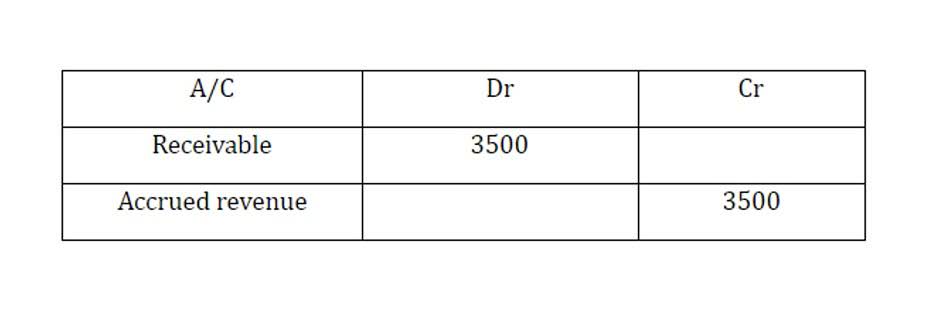
Step 4 – Record the Depreciation Expense as a Journal Entry.
- These applications are intended to assist you in keeping thorough records on all fixed assets and calculating depreciation.
- Divide the asset’s cost (minus its salvage value) by the total units you estimate the equipment to generate during its useful life to compute units of production depreciation.
- You have to adjust the calculation from one period to the next based on the asset’s usage, meaning you can’t set up an automatically posting depreciation entry in your accounting software.
- It aligns depreciation with actual wear and tear, providing a more accurate financial picture.
- This method can be contrasted with time-based measures of depreciation, such as straight-line or accelerated methods.
We assumed that the 120,000 units produced by the equipment were spread over 5 years. However, when the units of production method is used, the life in years is of no consequence. The method first computes the average depreciation expense per unit by dividing the amount of depreciable units of production depreciation basis by the number of units expected to be produced. From an accounting perspective, the UOP method ensures that the expense recognition principle is closely adhered to, matching expenses with revenues in the period in which they are incurred. This method is also favored for its ability to provide a more accurate picture of an asset’s consumption and remaining value, which can be insightful for internal decision-making and budgeting. The diagram below sets out an analysis of the units of production depreciation method.

Unit of Production Depreciation: Calculation, Comparison, and Impact
The units of production method of depreciation is a unique approach that aligns an asset’s expense recognition with its usage. This method is particularly insightful when considering assets whose wear and tear is more closely related to production levels rather than the passage of time. By examining case studies across different industries, we can see the versatility and practicality of this method in action. Since the units of production depreciation method uses the actual production levels of an asset to record deprecation expense, depreciation expenses can vary from year to year. Unlike straight line and double declining depreciation methods, units of production depreciation method is not based on a consistent percentage or table.

For example, computers and printers are not similar, but both are part of the office equipment. Depreciation on all assets is determined by using the straight-line-depreciation method. There are several methods for calculating depreciation, generally based on either the passage of time or the level of activity (or use) of the asset.
Depreciation costs correspond to revenues and expenditures by reflecting real wear and tear on such equipment. This strategy, however, is not applicable to all enterprises or for tax reasons. By implementing the UOP method, what are retained earnings businesses can achieve a more accurate match between the cost of an asset and the revenue it generates, which is a fundamental principle of accrual accounting. This method is especially beneficial for assets that have variable usage patterns and can lead to more informed decision-making regarding asset management and capital investment. It’s a tangible way to reflect the wear and tear on assets, ensuring that financial statements provide a realistic view of the company’s resources and obligations. The unit of production method finds its most effective application in industries where asset usage directly correlates with output.

Would you prefer to work with a financial professional remotely or in-person?
- Fixed costs usually relate to labor and property usage, or some other measure.
- If the sales price is ever less than the book value, the resulting capital loss is tax-deductible.
- Depreciation costs correspond to revenues and expenditures by reflecting real wear and tear on such equipment.
- The units-of-production depreciation method assigns an equal amount of depreciation to each unit of product manufactured or service rendered by an asset.
- Track the actual units produced by the asset during the accounting period.
- The activity of an asset may be assessed in units generated, but it can also be quantified in hours utilized or operations performed.
Some systems specify lives based on classes of Partnership Accounting property defined by the tax authority. Canada Revenue Agency specifies numerous classes based on the type of property and how it is used. Under the United States depreciation system, the Internal Revenue Service publishes a detailed guide which includes a table of asset lives and the applicable conventions.
Add comment